
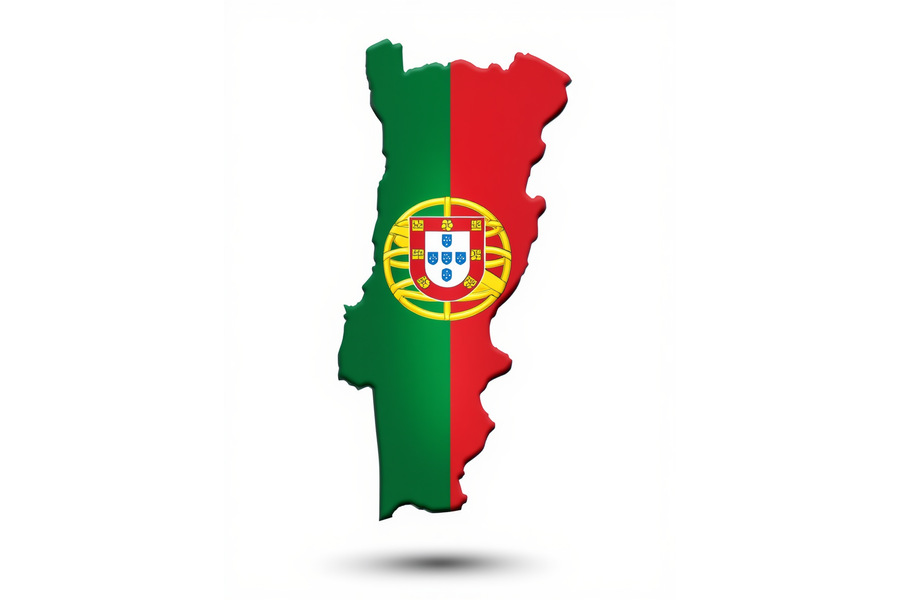
Portugal is a mid-sized Southern European economy with ~10.3 million people, strategically positioned as a gateway between Europe, Africa, and Latin America. It is a member of the Eurozone, which eliminates currency risk for intra-EU investors and anchors monetary policy stability.
Macroeconomic indicators (2024–2026 trends):
- GDP growth: ~2.0%–2.3% annually (moderate but stable expansion)
- Unemployment: ~6% (structurally improved vs post-2011 crisis levels)
- Inflation: ~2–3% (normalized after post-COVID spikes)
- Public debt: ~95–100% of GDP (high but declining trajectory)
- Key sectors:
- Tourism & hospitality (major GDP contributor)
- Real estate & construction (foreign capital-driven)
- Renewable energy (wind, solar; global leaders)
- Technology & IT services (rapidly scaling)
- Financial services (post-crisis consolidation)
Portugal is globally recognized for:
- Renewable energy leadership (notably wind/solar)
- Tourism-driven services economy
- Competitive tech talent and startup ecosystem (Lisbon hub)
- Strategic Atlantic connectivity (Brazil, Africa, US corridors)
This macro backdrop supports steady but not overheated M&A activity, characterized by foreign capital inflows and sector-specific consolidation rather than aggressive domestic megadeals.
M&A Regulatory Landscape in Portugal
Portugal operates under a civil law system aligned with EU directives, making it predictable and investor-friendly, though more bureaucratic than Anglo-Saxon jurisdictions.
Core Regulatory Authorities
- CMVM (Portuguese Securities Market Commission) – public M&A, takeover bids
- Autoridade da Concorrência (AdC) – competition/antitrust review
- Bank of Portugal / ECB – financial sector approvals
- Sector regulators (energy, telecom, etc.)
Key Legal Frameworks
- Public Takeovers (Securities Code)
- Mandatory bid required when:
- Acquiring >1/3 or >1/2 voting rights
- Equal treatment principle for shareholders
- Squeeze-out rights at ≥90%
- Merger Control (Competition Law)
- Mandatory notification if:
- Combined turnover exceeds thresholds
- Phase I (30 days) / Phase II (90 days)
- EU-level filings may override (via European Commission)
- Foreign Direct Investment (FDI Screening)
- Portugal has relatively liberal FDI rules, but:
- Government can block deals affecting strategic assets (energy, telecom, defense)
- Compared to France/Germany:
- Less interventionist
- More open to US and Spanish capital
- Labor & Corporate Constraints
- Strong employee protections:
- Works councils
- Transfer of undertakings (TUPE-like rules)
- Slower restructuring vs UK/US
How Portugal Differs from Other Countries
| Factor | Portugal | UK/US | France/Germany |
| FDI openness | High | High | Moderate/Restrictive |
| Bureaucracy | Moderate | Low | High |
| Labor rigidity | Medium-High | Low | High |
| Deal speed | Moderate | Fast | Slower |
| State intervention | Selective | Low | High |
Key takeaway:
Portugal is more flexible than core continental Europe, but still procedurally heavier than Anglo markets.
M&A Activity Levels & Trends (2018–2025)
Volume & Value
- ~300+ deals annually in recent years (declining trend)
- €4–5B deal value in 2025 (partial-year data)
- -18% YoY drop in deal count (2025)
- -41% capital deployed (2025)
Sector Distribution (2025)
- Real estate: most active sector
- Technology / IT: second largest
- Industrials, healthcare, insurance: rising activity
Cross-Border Dynamics
- Major investors:
- Spain
- United States
- Portugal acts as:
- Entry point into Lusophone markets
- Platform for EU expansion
Key Drivers Behind M&A Activity
Post-Crisis Consolidation
- Banking and energy sectors still restructuring post-2011 debt crisis
Foreign Capital Inflows
- Yield-seeking investors targeting:
- Real estate
- Infrastructure
- Renewables
Privatization Programs
- Government divesting:
- Airlines
- Energy assets
- Financial institutions
Technology Scaling
- Acquisition of SMEs for:
- Digital transformation
- Platform consolidation
Tourism & Real Estate Boom
- Hospitality and property consolidation driven by:
- Rising tourism
- Housing demand
Major & Notable M&A Deals in Portugal
Below is a curated list of 20+ major or influential deals (approximate values where public):
Banking & Financial Services
- Novo Banco (75%) → BPCE – €6.4B (2025)
- Banco Espírito Santo resolution → Novo Banco creation (~€4.9B, 2014)
- Millennium BCP recapitalization → Fosun (~€1B+)
- Banif acquisition → Santander (~€150M + liabilities)
Energy & Utilities
- EDP stake sale → China Three Gorges (~€2.7B)
- EDP Renováveis partial acquisitions (multiple, €500M+)
- Galp Energia stake changes (~€1B+ transactions over time)
Telecom & Technology
- Altice acquisition of Portugal Telecom assets (~€7.4B, 2015)
- NOS acquisition of Claranet Portugal – €152M
- Outsystems funding rounds (unicorn-level, >€1B valuation context)
Infrastructure & Transport
- ANA Airports → Vinci – €3.08B
- Brisa highways → multiple investors (~€2.5B+ cumulative)
Real Estate / Hospitality
- Vanguard / Comporta developments (multi-€100M deals)
- Multiple hotel portfolio acquisitions (€100M–€500M range)
Industrial & Mid-Market Deals
- Matrizevidente sale – €178.5M
- Cicomol → Arbonia (Swiss buyer)
- Auto Delta → Portobello Capital
- Brasmar stake acquisition (PE deal)
- Italbox acquisition (furniture sector)
- Ozo Living acquisition
Private Equity & Platform Builds
- Costa Almeida Ambiente (PE-backed growth deal)
- Claro industrial laundry merger (roll-up strategy)
2026: Most Recent M&A Developments
Recent activity is dominated by large strategic repositioning deals and privatizations:
- TAP Air Portugal privatization (ongoing, 2026)
- Bidders: Lufthansa, Air France-KLM
- Target: 44.9% stake
- Strategic rationale: transatlantic hub access (Brazil/Africa routes)
- Novo Banco acquisition completion (2026 expected)
- Buyer: BPCE
- Value: €6.4B
- Strategic goal: Iberian expansion and retail banking scale
Trend for 2026:
- Fewer but larger strategic deals
- Focus on infrastructure, banking, and transport
- Strong involvement of European strategic buyers
What Worked vs What Didn’t
Successful Strategies
- Cross-Border Strategic Acquisitions
- Example: BPCE → Novo Banco
- Outcome:
- Strengthened capital base
- Market expansion without major restructuring
- Infrastructure Privatizations
- Example: ANA Airports → Vinci
- Outcome:
- Long-term stable cash flows
- Efficient asset management
- Renewable Energy Consolidation
- Strong investor appetite due to:
- ESG mandates
- Predictable returns
Less Successful / Challenging Outcomes
- Banking Sector Crisis Deals
- BES collapse → systemic instability
- Required state intervention
- Overdependence on Real Estate
- Cyclicality risks
- Valuation inflation concerns
- Declining Deal Volume (2024–2025)
- Causes:
- Interest rate increases
- Global uncertainty
Strategic Patterns & Insights
Key Strategic Themes
- “Platform Portugal”
Foreign investors use Portugal as:
- Entry into EU
- Bridge to Brazil/Africa
- Buy-and-Build (Private Equity)
- Fragmented SME market
- Roll-up strategies (industrial, services)
- Infrastructure as Core Play
- Airports, energy, highways
- Stable long-term returns
- Digital & Tech Consolidation
- Acquiring capabilities rather than scale
Conclusion: M&A Outlook
Portugal’s M&A environment is best characterized as:
- Stable but cyclical
- Foreign-capital driven
- Sector-concentrated (real estate, energy, tech)
Despite a slowdown in 2025, structural strengths remain:
- EU alignment
- Strategic geography
- Growing tech ecosystem
Forward-looking (2026–2028):
- Increase in large strategic deals (privatizations, banking)
- Continued private equity roll-ups
- Expansion of renewables and infrastructure M&A
Portugal will likely remain a “mid-market M&A hub with occasional megadeals”, rather than a high-volume transaction economy like the UK or Germany.