
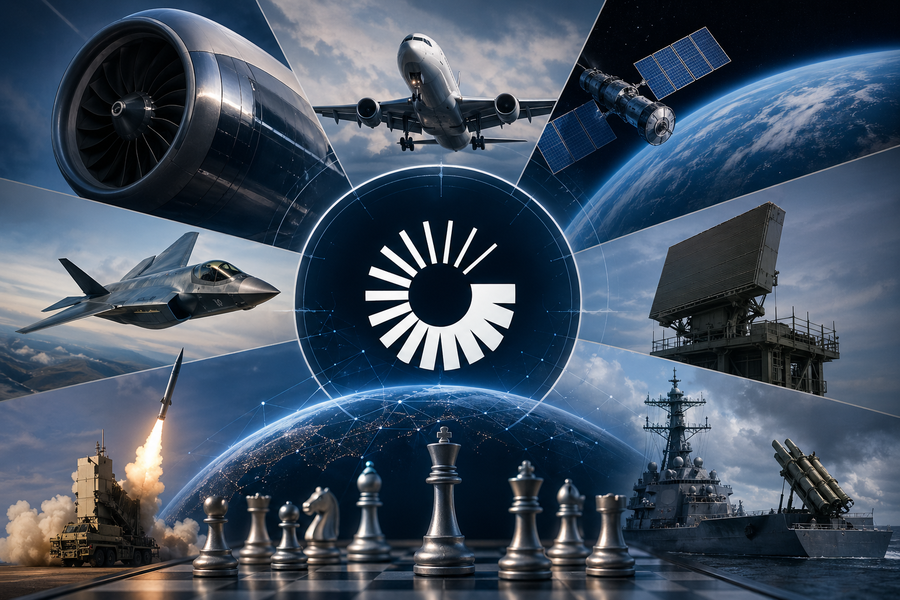
RTX Corporation (formerly Raytheon Technologies) is one of the world’s largest aerospace and defense conglomerates, formed in 2020 through the merger of Raytheon Company and United Technologies Corporation. The group operates across four core segments, Collins Aerospace, Pratt & Whitney, and the integrated Raytheon defense business (missiles, air defense, sensors, cybersecurity). It is a top-tier U.S. defense contractor with tens of billions in annual revenue (≈$68–74 billion range in recent years), over 180,000 employees globally, and a diversified backlog heavily tied to U.S. Department of Defense and allied governments. Its portfolio spans jet engines, avionics, missiles, radar systems, cybersecurity platforms, and space technologies, making it one of the most vertically integrated players in aerospace-defense globally.
Chronological M&A activity (selected major deals)
Below is a consolidated, chronological list of notable Raytheon / Raytheon Technologies / UTC-related M&A transactions. Values are approximate where disclosed:
1990s–2000s (foundation building)
- 1995 – E-Systems acquisition – ~$2.3B
- 1997 – Hughes Aircraft (defense units) – ~$9.5B (from General Motors)
- 1999 – Texas Instruments Defense Systems & Electronics – ~$2.95B
- 2000 – Litton Industries (via Northrop deal competition context) – strategic loss (not completed)
- 2004 – BBN Technologies (later completed 2009) – groundwork
2009–2014 (technology & cyber expansion)
- 2009 – BBN Technologies – ~$350M
- 2010 – Applied Signal Technology – ~$490M
- 2012 – SafeNet Government Solutions (partial assets) – undisclosed
- 2014 – Blackbird Technologies – ~$420M
2015–2018 (cybersecurity & services pivot)
- 2015 – Websense (Vista Equity Partners) – ~$1.9B
- 2015 – Foreground Security – ~$62M
- 2016 – Stonesoft (from Intel Security) – undisclosed
- 2017 – Integration into Forcepoint (cyber platform consolidation) – strategic restructuring
- 2018 – Integration deals within cyber & analytics units – undisclosed
2019–2020 (transformational merger era)
- 2019–2020 – Merger: Raytheon + United Technologies – ~$120–135B
- 2019 – UTC spin-offs (Otis, Carrier) – restructuring prerequisite (multi-billion separations)
- 2020 – Blue Canyon Technologies – undisclosed (small satellite manufacturer)
UTC legacy deals (now part of RTX portfolio)
- 2012 – Goodrich Corporation (UTC) – ~$16.5B
- 2018 – Rockwell Collins (UTC) – ~$30B (incl. debt)
- Various bolt-on aerospace suppliers (UTC/Collins) – billions cumulatively
2021–2025 (post-merger bolt-ons & integration)
- 2021–2023 – Digital aviation & AI analytics tuck-ins – undisclosed
- 2022 – Hypersonics & defense tech investments – undisclosed
- 2023 – Internal merger: Raytheon Intelligence & Space + Missiles & Defense – restructuring
- 2024–2025 – Small capability acquisitions (cyber, sensors, space tech) – undisclosed
(Note: Public disclosure of smaller defense acquisitions is often limited due to national security constraints.)
Strategic rationale behind M&A
Raytheon’s M&A strategy has consistently followed three structural themes:
- Portfolio convergence (Defense + Aerospace)
The 2020 merger created a balanced revenue mix between commercial aerospace and defense, reducing cyclicality. The rationale was to combine:
- UTC’s aerospace systems & engines
- Raytheon’s missiles, radar, defense electronics
- Capability-driven acquisitions (cyber, AI, sensors)
Deals like Websense, BBN, and Applied Signal show a clear pivot toward:
- Cybersecurity
- Intelligence systems
- Data analytics
These capabilities align with modern warfare trends (network-centric, digital battlefield).
- Vertical integration & systems leadership
Large deals (Goodrich, Rockwell Collins via UTC) enabled:
- Control of supply chains
- Higher-margin integrated systems
- Platform-level dominance (aircraft + avionics + engines + weapons)
Divestitures and restructuring
RTX has also been active on the divestiture side, often as part of strategic repositioning:
- 2019–2020 – Spin-offs of Otis Elevator and Carrier (UTC): enabled the Raytheon merger by simplifying the portfolio.
- Forcepoint (cybersecurity JV) – partial divestment and restructuring over time.
- 2023 – Internal consolidation of Raytheon business units (Missiles & Defense + Intelligence & Space) to reduce duplication
These moves reflect a focus on core aerospace and defense platforms, exiting lower-synergy or non-core assets.
2026 and most recent developments
While large-scale acquisitions have slowed, 2026 activity reflects operational scaling rather than transformational M&A:
- RTX (Raytheon segment) signed multi-year missile production agreements with the Pentagon to dramatically increase output of Tomahawk, AMRAAM, and SM-series systems
- Continued large defense contracts globally, including Patriot systems exports (e.g., Spain deal ~$1.7B in late 2025)
The current strategy emphasizes:
- Scaling production capacity
- Long-term government contracts
- Organic growth over large acquisitions
What worked vs. what didn’t
Successful strategies
- The 2020 mega-merger (transformational success)
- Created one of the largest aerospace-defense companies globally
- Diversified revenue streams (defense + commercial aerospace)
- Generated cost synergies and cross-selling opportunities
- Cybersecurity expansion (Websense → Forcepoint)
- Positioned Raytheon early in cyber warfare
- Built recurring revenue streams beyond hardware
- UTC legacy acquisitions (Goodrich, Rockwell Collins)
- Strengthened aerospace dominance
- Enabled full-stack aviation systems integration
Less successful / mixed outcomes
- Cybersecurity integration challenges
- Forcepoint struggled to compete with pure-play cyber firms
- Eventually partially divested/restructured
- Complexity post-merger
- Large conglomerate structure increased operational complexity
- Required 2023 internal consolidation
- Limited transparency in smaller acquisitions
- Defense-sector secrecy reduces investor clarity
- Makes ROI evaluation harder
Strategic assessment
Raytheon/RTX’s M&A strategy can be characterized as “platform consolidation + capability augmentation.”
- Pre-2020: targeted acquisitions to build capabilities (cyber, ISR, analytics)
- 2020: executed a transformational merger to redefine scale and scope
- Post-2020: shifted to integration, optimization, and selective bolt-ons
The company’s current trajectory suggests:
- Fewer mega-deals
- Greater emphasis on organic growth, defense contracts, and industrial scaling
- Continued focus on next-gen technologies (hypersonics, space, AI-enabled defense)
RTX Corporation has executed a highly ambitious and structurally transformative M&A strategy that prioritizes scale, diversification, and long-term resilience over simplicity and short-term efficiency. The combination of legacy capability acquisitions and the landmark merger with United Technologies Corporation has positioned the company as a uniquely integrated aerospace-defense platform with exposure to both commercial and military demand cycles. While this breadth introduces operational complexity and integration challenges, it also provides strategic flexibility and downside protection that more focused peers lack. Compared with competitors, RTX’s approach reflects a deliberate trade-off: accepting higher execution risk in exchange for a broader opportunity set and stronger positioning across next-generation defense and aerospace technologies.