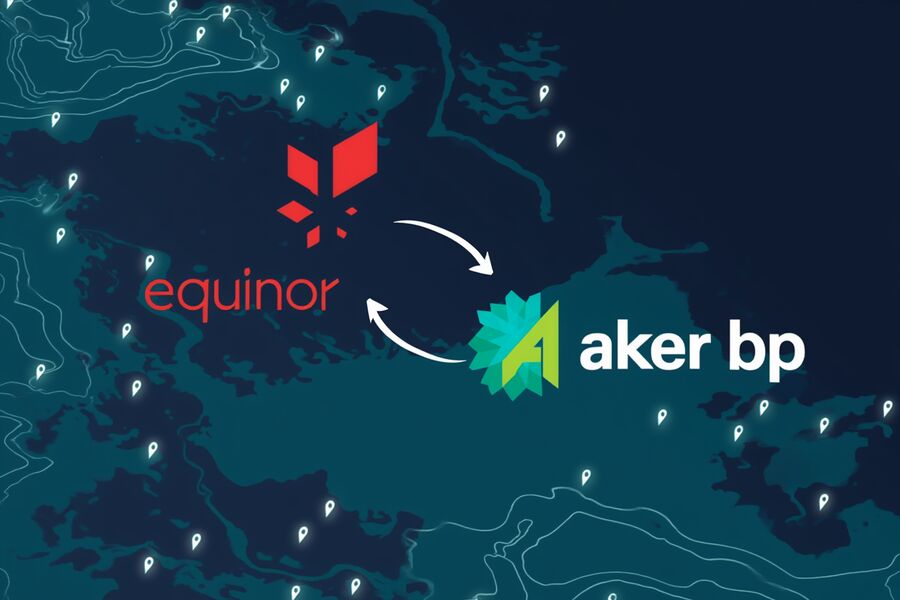
Norwegian energy majors Equinor and Aker BP announced a strategic asset swap involving several offshore oil and gas fields on the Norwegian Continental Shelf (NCS). The transaction reflects a broader industry trend toward portfolio optimization, operational consolidation, and accelerated development of high-value hydrocarbon assets in mature offshore basins.
The Companies Involved
Equinor
Equinor is Norway’s majority state-owned energy company and the largest operator on the Norwegian Continental Shelf. Formerly known as Statoil, Equinor has evolved into a diversified energy group with operations spanning oil and gas, offshore wind, carbon capture, and low-carbon technologies. The company remains a cornerstone of European energy supply, particularly in natural gas exports to Europe.
Equinor’s upstream strategy increasingly focuses on:
- maximizing value from core Norwegian assets,
- reducing portfolio complexity,
- improving capital efficiency,
- and prioritizing developments with lower unit costs and lower emissions intensity.
Aker BP
Aker BP is one of Europe’s largest independent exploration and production (E&P) companies, focused almost entirely on the Norwegian Continental Shelf. The company was created through the merger of Det norske oljeselskap and BP’s Norwegian assets, and later expanded significantly through its acquisition of Lundin Energy’s oil and gas business in 2022.
Aker BP has built a reputation for:
- high operational efficiency,
- rapid project execution,
- digitalized offshore operations,
- and aggressive production growth strategies.
The company has consistently pursued bolt-on acquisitions and stake swaps to strengthen cluster-based development strategies across the North Sea and Norwegian Sea.
Overview of the Transaction
The announced deal involves a multi-asset exchange of ownership stakes in several offshore licenses and developments, primarily involving:
- the Ringvei Vest discovery cluster,
- the Yggdrasil area,
- and the Wisting area.
According to reports, the transaction includes:
- Aker BP acquiring a 19% stake from Equinor in licenses tied to the Ringvei Vest area,
- Aker BP also receiving a 38.16% stake in the Frigg area,
- while Equinor receives a 7.5% stake in the Wisting discovery plus a cash balancing payment of approximately $23 million.
Following the swap:
- Equinor’s ownership in Wisting increases to approximately 42.5%,
- while Aker BP will hold around 27.5%.
The companies also indicated that additional transactions could follow as both parties continue aligning strategic interests across the NCS.
Transaction Method: Asset Swap and Portfolio Rationalization
From an M&A perspective, this transaction is best categorized as a strategic asset swap combined with portfolio rationalization.
Unlike a traditional acquisition financed entirely through cash or equity issuance, this structure involves:
- exchanging ownership interests in selected producing or undeveloped assets,
- balancing value differences through limited cash consideration,
- and realigning operatorship and equity concentration around strategic hubs.
This type of transaction is common in upstream oil and gas markets because it allows companies to:
- consolidate positions around core infrastructure,
- simplify joint venture structures,
- improve operational control,
- reduce decision-making friction,
- and accelerate field development timelines.
The transaction appears to follow a “cluster optimization” model, where each company deepens exposure in areas where it already has strategic or operational advantages.
For example:
- Equinor strengthens its position in Wisting, one of the largest undeveloped oil discoveries in the Barents Sea,
- while Aker BP enhances its exposure to developments that fit its infrastructure-led growth strategy.
This is consistent with broader North Sea M&A behavior observed over the past decade, where companies increasingly exchange non-core assets rather than pursue large-scale corporate takeovers.
Strategic Rationale Behind the Deal
- Alignment of Ownership Interests
One of the main objectives is to align ownership structures across interconnected developments.
Fragmented ownership in offshore developments can:
- slow investment approvals,
- complicate project governance,
- and reduce operational flexibility.
By concentrating stakes among fewer partners with aligned priorities, both companies can accelerate:
- field sanctioning,
- infrastructure tie-backs,
- drilling programs,
- and subsea development decisions.
Equinor explicitly stated that the deal would “enable better and faster project decisions.”
- Development Efficiency
The Norwegian Continental Shelf increasingly relies on:
- subsea tiebacks,
- shared infrastructure,
- electrified platforms,
- and integrated regional developments.
Asset swaps help operators optimize these systems by creating more coherent asset clusters.
For Aker BP, this aligns with its strategy of building concentrated production hubs connected to existing infrastructure, minimizing greenfield capital expenditure.
For Equinor, the transaction supports its long-term objective of maximizing high-value production toward 2035.
- Risk and Capital Allocation
Offshore oil projects require substantial upfront capital and long development cycles.
By adjusting stake sizes:
- companies can rebalance risk exposure,
- optimize capital deployment,
- and improve reserve replacement economics.
This becomes especially important in an environment where:
- ESG scrutiny remains high,
- investors demand capital discipline,
- and oil companies face pressure to balance hydrocarbons with energy transition investments.
Industry Impact
Increased Consolidation on the Norwegian Continental Shelf
The transaction reinforces an ongoing consolidation trend across the NCS.
Over the past several years:
- majors have divested smaller or non-core assets,
- independents like Aker BP have expanded aggressively,
- and operators have increasingly pursued asset swaps rather than outright mergers.
This creates:
- larger operational hubs,
- fewer fragmented ownership structures,
- and more efficient field development economics.
The trend is likely to continue as mature basins prioritize cost efficiency and infrastructure utilization.
Faster Development of Undeveloped Discoveries
The deal could accelerate development timelines for important Norwegian discoveries, particularly in:
- the Barents Sea,
- and North Sea infrastructure clusters.
Wisting is especially significant because it represents one of Norway’s largest undeveloped offshore oil discoveries.
Greater ownership alignment can improve:
- sanction timing,
- financing certainty,
- and execution coordination.
That could help sustain Norwegian production levels well into the 2030s.
Enhanced European Energy Security
Norway is Europe’s largest oil and gas producer and one of its most important gas suppliers following the reduction of Russian pipeline exports after the Ukraine war.
Any transaction that improves:
- project efficiency,
- reserve recovery,
- and production stability
has broader geopolitical implications for European energy security.
The Norwegian government continues supporting long-term offshore development to maintain stable supply to Europe.
Environmental and Regulatory Considerations
Despite the strategic logic of the transaction, Norwegian offshore developments face growing environmental scrutiny.
Projects including Yggdrasil have already faced legal challenges related to climate impact assessments.
As a result:
- regulatory approvals,
- environmental compliance,
- and emissions management will remain critical to execution.
This means future M&A and asset swaps on the NCS may increasingly incorporate:
- carbon intensity metrics,
- electrification plans,
- and emissions reduction commitments into valuation frameworks.