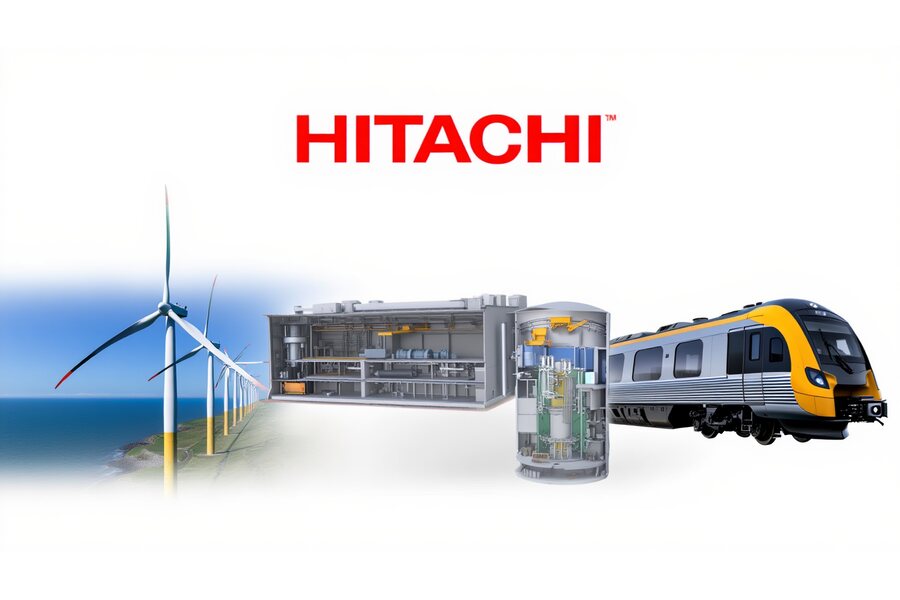
Hitachi, Ltd. is a Japanese multinational conglomerate that has, over the past decade, reshaped itself from a broad hardware conglomerate into a platform and services-led “Social Innovation Business.” As of the FY2023 Integrated Report, Hitachi’s consolidated workforce was 322,525 employees, consolidated revenues for fiscal 2023 were ¥9,728.7 billion, and total assets were about ¥12,221.2 billion (figures are Hitachi’s official consolidated numbers). These scale metrics explain why Hitachi’s M&A moves, often large, cross-border and transformational matter for industries from power grids and mobility to digital engineering and materials.
Chronological overview of major M&A activity
Below is a narrative timeline of how Hitachi used M&A and portfolio moves to shift from industrial manufacturing toward higher-margin digital, energy and infrastructure services.
2012–2015 — Strategic footholds in energy, nuclear and rail
- 2012 — Horizon Nuclear Power (UK): Hitachi bought Horizon from UK utilities (RWE/E.ON) to pursue UK nuclear new-builds (project later suspended on economic grounds). (Hitachi press releases 2012.)
- 2012 — The Railway Engineering Company (UK): targeted to strengthen Hitachi Rail’s UK capability.
- 2015 — Ansaldo businesses (Italy): Hitachi acquired AnsaldoBreda and a 40.1% stake in Ansaldo STS (rail/ signalling), paying ~€773 million for the Ansaldo STS stake — a move that materially expanded Hitachi Rail’s European footprint.
2016–2018 — Building scale in industrial products and grid/electrification
- 2016–2017 — Bradken (Australia): Hitachi Construction Machinery (group-related) completed takeover of Bradken (valued ~A$976m incl. debt), bolstering parts/aftermarket for mining equipment.
- 2017 — Sullair (USA): Hitachi acquired Sullair (air compressors) for US$1.245 billion, to expand industrial products and North American reach.
- 2017 — Hitachi Koki (power tools) divestiture: Hitachi sold its power-tools unit (Hitachi Koki) to KKR for about ¥147.1 billion (~US$1.3bn) — an early example of Hitachi trimming non-core assets.
2018–2021 — Big transformational deals to pivot toward energy and digital services
- 2018 (announced) / 2020 (close) — ABB Power Grids: Hitachi agreed to buy 80.1% of ABB’s Power Grids business — the initial stake purchase was reported by Hitachi as approx US$6.85 billion (¥740.0 billion) for the 80.1% — creating what was rebranded Hitachi ABB Power Grids → Hitachi Energy (a major strategic bet on electrification and grids). Hitachi later exercised options/payments to acquire remaining stakes (see below).
- 2019–2021 — Healthcare & chemicals portfolio adjustments: Hitachi sold its diagnostic imaging business to Fujifilm for ¥179 billion (announced Dec 2019; completed in 2021) and agreed to sell Hitachi Chemical (later bought by Showa Denko / Resonac) in large transactions — demonstrating a pivot: sell some legacy manufacturing to free capital for services/digital.
- 2021 — GlobalLogic acquisition: Hitachi acquired GlobalLogic (digital engineering / software services) in a marquee deal: equity value ~US$8.5bn; total acquisition cost including debt ~US$9.6bn (Hitachi described an enterprise value of about US$9.5bn and total acquisition cost ~US$9.6bn). The rationale was clear: accelerate Hitachi’s Lumada platform and digital engineering capability.
2022–2023 — Portfolio refinement and completing earlier plays
- 2022 — ABB remaining stake settlement: Hitachi and ABB agreed terms for ABB to sell the remaining stake in Hitachi Energy (call option exercise value disclosed at US$1.679bn between the parties for remaining interest settlement) — making Hitachi Energy fully controlled over time.
- 2021–2023 — Hitachi Metals and other disposals: Hitachi continued to divest non-core materials and hardware (Hitachi Metals transaction / rebranding to Proterial etc.), part of a multi-year portfolio clean-up to focus on Social Innovation Business.
Hitachi group – notable M&A deals
Below is the list of deals Hitachi (and closely related Hitachi Group entities such as Hitachi Construction Machinery, Hitachi Rail/HGDH and Hitachi Vantara) announced or closed — with the most reliable public numbers that could be found cited next to each item.
- Horizon Nuclear Power (UK) — acquisition announced 2012 (value not publicly disclosed at acquisition announcement).
- The Railway Engineering Company (TRE), UK — 2012 (price not publicly disclosed).
- AnsaldoBreda / 40.1% of Ansaldo STS (rail signalling) — €773 million (2015).
- Johnson Controls-Hitachi Air Conditioning JV (Hitachi’s HVAC business) — 2015 (transactional JV; deal structure / stakes public; later sold by JC/HV to Bosch in 2024).
- Bradken (Australia) — Hitachi Construction Machinery — ~A$976 million (2016–2017).
- Sullair (air compressors, USA) — US$1.245 billion (agreement announced Apr 2017; close July 2017).
- Hitachi Koki (power tools) — sale to KKR — ¥147.1 billion (~US$1.3bn) (2017). (divestiture).
- ABB Power Grids — 80.1% stake — approx US$6.85 billion (¥740bn) (deal announced Dec 2018; 80.1% closing July 2020).
- Acquisition of remaining stake / settlement with ABB (closing remaining economic interests) — exercise/settlement figure disclosed in ABB/Hitachi papers: US$1.679 billion (2022 arrangements referenced).
- Sale of Diagnostic Imaging (Medical Systems) to Fujifilm — ¥179 billion (~US$1.6bn) (announced Dec 2019; completed 2021).
- Sale of Hitachi Chemical (to Showa Denko / Resonac split) — transaction headlines: tender/offer ~¥960 billion (~US$8.8bn) indication for entire Hitachi Chemical valuation; Hitachi received roughly ¥382 billion (~US$3.5bn) for its 53% stake in one public disclosure (figures vary by reporting lines). (divestiture, 2019–2020).
- GlobalLogic (digital engineering) — equity value ~US$8.5bn; total cost incl. debt ~US$9.6bn (announced Mar 2021; closed July 2021).
- Hitachi Vantara + Hitachi Consulting integration (merger/realignment) — 2020–2021 (strategic consolidation of IT/data businesses; internal restructuring rather than an external buyout with a single price).
- Hitachi sells 60% of overseas home appliances business to Arçelik — US$300 million (Dec 2020) (divestiture of consumer appliance operations outside Japan).
- Hitachi Metals sale to Bain-led consortium — consortium enterprise ~US$7.5bn for entire Hitachi Metals (announced Apr 2021; close process thereafter). Hitachi’s portion reception ~¥382 billion (~US$3.5bn) for its 53% stake was widely reported. (divestiture).
- Hitachi acquires the Sullair business rebrands later as Hitachi Global Air Power — (integration/brand moves — Sullair acquisition value repeated: US$1.245bn).
- Sale / reorganization of Hitachi Energy-related transitional payments and full ownership — 2022 (ABB/Hitachi settlement line items around US$1.679bn, see above).
- Divestment and consolidation of automotive parts into Hitachi Astemo (JV with Honda et al.) — structural M&A in auto sector (Astemo formed Jan 2021 — strategic consolidation; specific valuation pieces in company filings).
Recent M&A activity (2024–2025)
- Continued bolt-ons to Hitachi Energy and industrial units (2024): Hitachi and its energy arm expanded manufacturing and automation capabilities with targeted acquisitions (e.g., MA micro automation in 2024 — a move to strengthen robotics/automation in industrial production). Hitachi’s corporate releases and regional press note a string of smaller, capability-focused buys to fill tech gaps.
- Metals unit sale processes / buyers (2024–2025): Hitachi continued to manage sales of remaining non-core units; in 2025 media reported Hitachi narrowing buyers for its metals unit, with private equity (KKR among bidders) and reports indicating potential deal values in excess of US$6–7bn in play — a continuation of the group’s portfolio rebalancing. (Reports in 2025 suggested potential deals > US$6.4bn depending on scope.)
- Hitachi Energy selective stakes and investments (2024–2025): Hitachi has been actively investing in grid-services, capacity expansion and selective stake purchases to secure global supply for HV equipment given accelerating demand for transformers and grid infrastructure (news coverage through 2024–2025 highlights factory investments and minority stake investments). Recent 2025 reporting (Hitachi Energy partnerships/investments) demonstrates the company’s ongoing M&A/strategic-investment focus to meet electrification demand.
Divestitures — notable exits and their strategic logic
Hitachi’s divestitures in the 2018–2023 period are as important as the acquisitions: they funded larger, strategic bets and simplified the group.
Notable divestments:
- Hitachi Koki → KKR (2017): sale of power tools (¥147.1bn / US$1.3bn). Rationale: focus on higher-growth, higher-margin businesses.
- Diagnostic Imaging → Fujifilm (announced 2019; completed 2021): ¥179 billion — sold to focus Hitachi on Lumada / digital and infrastructure
- Hitachi Chemical → Showa Denko / Resonac (2019–2020): large chemical/materials divestment (headline valuations up to ~¥960bn for total equity). Hitachi monetized mature manufacturing assets to redeploy capital.
- Hitachi Metals → Bain-led consortium (announced 2021): headline consortium price ~US$7.5bn for the whole company; Hitachi’s realized proceeds for its stake were reported separately (~¥382bn for 53%). This is one of the largest divestments and shows Hitachi extracting value from legacy materials operations to fund platform plays.
What worked and what didn’t — lessons
Successes:
- Transformational acquisitions that fit the strategy
- GlobalLogic (2021): This is a clear strategic success in positioning Hitachi as a digital engineering + platform company. The acquisition delivered large-scale software capability that plugs directly into Hitachi’s Lumada strategy — a major accelerant for digital transformation revenue streams. The market and Hitachi’s disclosures treat GlobalLogic as the cornerstone of the digital push.
- Electrification / grid play (Hitachi Energy / ABB Power Grids)
- Buying ABB’s Power Grids was high risk and high reward: it gave Hitachi global market leadership in HV equipment and HVDC, aligning with secular demand for grid modernization and renewables. The move has supported Hitachi’s strategic pivot to infrastructure and energy, and Hitachi Energy has become a core, higher-growth business. The initial equity and subsequent settlement to take full ownership show Hitachi’s commitment to the space.
- Disciplined portfolio pruning and cash recycling
- Selling assets (diagnostic imaging, Hitachi Chemical, Hitachi Metals stake) raised significant proceeds and simplified the group — enabling the large digital and energy plays. This is textbook portfolio management: exit mature, low-growth segments and redeploy to higher-growth capabilities.
Where Hitachi stumbled or faced challenges:
- Timing & integration complexity
- Large cross-border deals (ABB Power Grids; GlobalLogic) carry execution, integration and regulatory complexity. Integration of a massive software services firm into a historically industrial conglomerate is non-trivial; culture, go-to-market and compensation models differ. These are not “failures” but pose short-term margin and execution risks. Market commenters noted the high multiples paid for GlobalLogic and the pressure to deliver synergies.
- Nuclear/Horizon investments and program suspensions
- The Horizon nuclear investment (UK) illustrated the political and financing risks of infrastructure projects; Hitachi later suspended new-build efforts citing lack of economic rationality for the private sector. Large strategic moves in regulated infrastructure face different risk sets than software or equipment.
- Some large divestments were forced by restructuring realities
- While selling Hitachi Chemicals / Hitachi Metals monetized value, these moves also reflected earlier over-diversification. The scale of disposals shows an acknowledgement that previous conglomerate footprints were too sprawling. While financially sensible, divesting core manufacturing changes long-term industrial capabilities and required careful reallocation of R&D and supply-chain know-how.
Hitachi Strategic reasoning
- Pivot from hardware to “Social Innovation” platforms
- Hitachi’s public strategy is to combine OT (sensors, equipment) + IT (software, cloud, digital engineering) to deliver platform solutions (Lumada) across energy, mobility, industry, and public services. Buying GlobalLogic accelerates the software side; ABB Power Grids buys scale in electrification hardware and systems needed for green transitions. The divestitures funded those purchases. (Hitachi integrated reports, deal releases).
- Buy capabilities (digital, grid, services) and sell commodity
- Acquisitions focused on high-margin, recurring, serviceable revenue (digital engineering, grid services). Sales trimmed commodity, low-return businesses (some chemicals, consumer appliances outside Japan, power tools) to improve capital efficiency.
- Geographic and sectoral expansion via targeted buys
- Acquisitions such as Ansaldo (Europe rail), Sullair (North American compressors), Bradken (Australian mining parts) show a repeated playbook: buy local market leaders to get global reach in segments where scale/aftermarket matters.
- Financial engineering and staged ownership
- The ABB deal’s staged ownership (80.1% → later full ownership) and the way Hitachi structured its purchases and divestments show conscious risk/return sequencing — secure control and integration before fully committing incremental capital.