
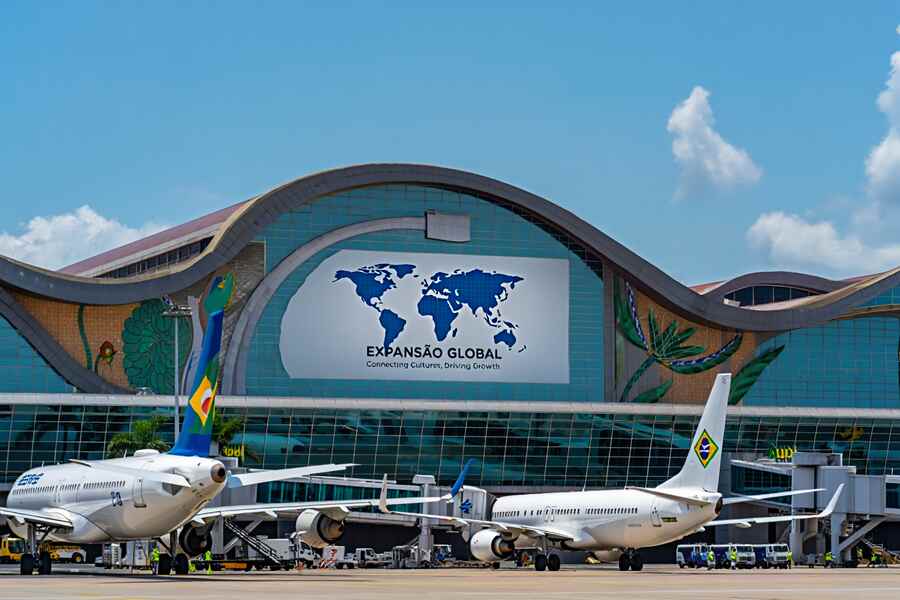
Grupo Aeroportuario del Sureste (ASUR) signed an agreement to acquire Motiva Infraestrutura de Mobilidade’s airport portfolio for R$11.5 billion (≈ US$2.16 billion) including net debt; ASUR will pay R$5.0 billion in cash with the balance accounted for as net debt assumed. The deal covers stakes in 17–20 airports across Brazil plus international assets in Quito (Ecuador), San José (Costa Rica) and Curaçao, and is expected to close in the first half of 2026, subject to customary regulatory approvals.
The parties involved
Grupo Aeroportuario del Sureste (ASUR)
ASUR is a Mexico-based airport operator listed in Mexico and on the NYSE. The group is best known for managing high-traffic tourist and regional airports in southeast Mexico (including Cancún), and it also operates airports in Colombia and Puerto Rico. ASUR positions itself as an operator focused on passenger experience, commercial revenues and airport concession management. The company reports monthly traffic figures publicly and has been actively growing its international footprint.
Motiva Infraestrutura de Mobilidade (Motiva)
Motiva — the mobility infrastructure company spun out from the CCR group — is one of Brazil’s largest infrastructure concession operators. It manages assets across highways, urban mobility (rail and transit) and airports. Motiva’s airports platform includes stakes in numerous regional Brazilian airports and selected international concession interests; the company has stated that it is refocusing capital toward core mobility assets such as highways and rail. Motiva’s management (CEO Miguel Setas) has framed the divestment as part of portfolio simplification and capital recycling.
Deal economics & structure (from public filings and filings commentary)
- Total enterprise consideration: R$11.5 billion (including net debt), quoted by Motiva in its securities filing and reported by Reuters.
- Cash paid at signing by ASUR: R$5.0 billion; the remainder is reflected as net debt assumed in the transaction.
- Scope: The package includes stakes in a large Brazilian regional airport portfolio (some sources reference 17 airports; other reporting and industry summaries reference up to ~20 airports including the international concessions in Quito, San José and Curaçao).
- Timing & conditions: Closing anticipated in H1 2026, conditional on antitrust and other regulatory approvals and customary closing conditions.
Strategic rationale — why this makes sense for ASUR and Motiva
For ASUR (buyer):
- Step change in scale and market exposure. The acquisition brings ASUR a significant entry into Brazil, Latin America’s largest aviation market by passenger volume, and adds ~45 million annual passengers to ASUR’s existing base (cited on a 2024 basis), materially increasing its regional footprint. This accelerates ASUR’s geographic diversification beyond Mexico, Colombia and Puerto Rico.
- Portfolio diversification across leisure and domestic markets. Brazil’s airport network has a different demand mix (strong domestic flows, regional connectivity) than ASUR’s Mexican leisure-heavy profile, which can smooth traffic cyclicality.
- Commercial and operational synergies potential. ASUR has emphasized commercial revenue optimisation at terminals; adding a large portfolio could create opportunities to scale retail, parking, and aeronautical revenue management. (This is a strategic framing consistent with ASUR’s stated operating model.)
For Motiva (seller):
- Capital recycling and strategic focus. Motiva has stated the sale is intended to simplify the company and free capital to concentrate on highways, rail and other mobility concessions, businesses it considers core to its strategy, while materially reducing airport exposure and leverage. Motiva expects its net-debt leverage to fall (the company indicated a move from ~3.5× toward under 3×).
Financing, approvals and timing — practical points
Public reporting indicates ASUR will fund the transaction with a mix of cash on hand and committed financing (market commentary referenced committed debt financing as part of the plan). The transaction is now in the regulatory and implementation phase; antitrust and concession transfer approvals in Brazil and in the international jurisdictions involved (Ecuador, Costa Rica, Curaçao) will be required and could shape timing and any remedies. Closing guidance provided publicly targets first half 2026.
Key risks & integration considerations
- Regulatory clearance risk. Airport deals often attract scrutiny from competition and national security/aviation authorities, particularly when cross-border ownership and strategic infrastructure are involved. Approvals in Brazil will be decisive.
- Concession transfer and contract complexity. Many Brazilian airports are operated under concession contracts with transfer conditions, performance guarantees and local regulatory oversight, ASUR must manage these contractual novations and any contingent liabilities.
- Operational integration & local market knowledge. Running airports in Brazil (with regional, domestic, and municipal stakeholders) differs from ASUR’s core Mexican operations. Retaining local management talent, maintaining service levels and integrating commercial systems will be crucial.
- Financing & leverage impact. Although ASUR is paying a cash portion and assuming debt, any material increase in leverage or unforeseen liabilities could affect credit metrics; conversely Motiva’s balance-sheet de-leveraging is a stated benefit for the seller.
Market reaction & broader implications
- Regional consolidation: The deal underscores ongoing consolidation among airport operators in Latin America. ASUR’s move competes with other regional/global operators (Aena, Corporación América, among others) that have shown appetite for Latin American assets.
- Investor perspective: For ASUR investors, the transaction offers accelerated growth and diversification but introduces execution and regulatory risk; for Motiva shareholders, the sale crystallises value and redeploys capital into core mobility businesses. Motiva has publicly framed the divestment as a value-creating simplification.
This transaction is a strategically coherent expansion for ASUR: it buys scale and entry into Brazil while taking on a mature, cash-generative airport portfolio. For Motiva, the sale aligns with a credible capital-allocation story, recycling proceeds to strengthen balance sheets and redeploy into core mobility concessions.
The deal’s success will hinge on regulatory approvals in multiple jurisdictions, careful concession transfer work, and ASUR’s ability to integrate and extract commercial upside without disrupting airport operations. Given the reported price and structure (R$5.0bn cash + assumed net debt to total R$11.5bn), the economics look plausible, but realization of full value will be driven by execution over the next 6–18 months to closing and early ownership.