
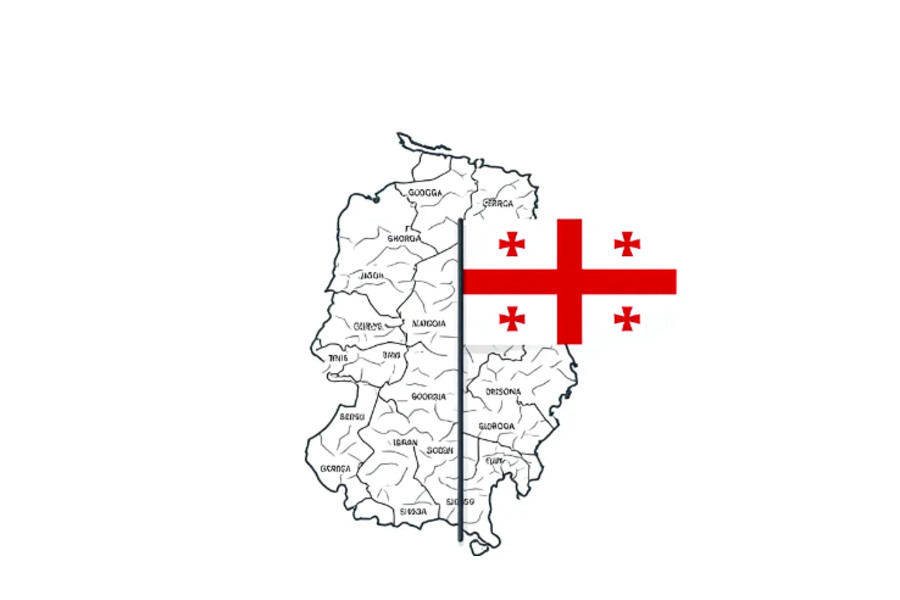
Georgia, a strategic cross‑roads between Europe and Asia on the Black Sea, has maintained robust economic growth over recent years. In early 2024, real GDP growth peaked at approximately 9.5% year‑on‑year, led by manufacturing, construction, and professional services, though sectors like energy and mining saw declines. The World Bank revised its 2023 growth forecast to 5.9%, and Fitch projected 5.0% in 2024, rising to 5.1% in 2025. Foreign trade in 2023 reached around US 21.5 billion, up 12.5%, with a trade deficit of approximately US 9.35 billion.
Key thriving industries include banking and financial services, energy (notably hydropower), agriculture and wine, logistics and transport (leveraging its Silk Road location), and increasingly tourism and hospitality. Georgia is known for liberal economic policy, low corporate taxes, and its Deep and Comprehensive Free Trade Area (DCFTA) with the EU, granting access to European markets under EU‑style regulations since 2016.
M&A Regulatory Landscape in Georgia
Georgia’s competition and M&A regulatory framework is aligned with EU legislation through its Association Agreement and DCFTA obligations. The Georgian Competition and Consumer Protection Agency (GCCA), an independent authority, enforces the Law on Competition and related by‑laws adopted starting 2014, and further reformed significantly in 2020 and again effective January 2024.
Key Features:
- Mandatory notification thresholds: prior notification required if combined revenue in Georgia exceeds 20 million GEL, and each participant has over 5 million GEL revenue.
- Two‑phase review process: Phase I is 25 working days; Phase II, if triggered, adds up to 90 calendar days. The GCCA may impose structural/behavioural remedies.
- Gun‑jumping fines: up to 5% of annual turnover; small administrative fines have been issued (e.g. ~15 000 GEL in 2021, higher in 2024, e.g. up to ~263 k GEL).
- Wider regulatory reach: The Law on Competition now applies fully to regulated sectors (finance, telecom, energy), and GCCA cooperates with sector regulators.
Compared to EU countries, Georgia’s framework is similar in structure but operates on a smaller scale, with low thresholds in local currency, faster timing, and emerging enforcement maturity.
M&A Activity & Historical Deals
Georgia has seen a steady flow of mostly domestic and regional M&A, especially in banking & finance, energy, retail, and infrastructure. However, large cross‑border megadeals remain rare.
Detailed deal‑by‑deal data is limited publicly; professional firms like Gvinadze & Partners have advised on transactions such as acquisitions of Georgian banks, beverage plants, port concessions, gold mining holdings, real‑estate platforms, hotel chains, and hydropower assets.
Some notable historic transactions include:
- Bank of Georgia acquisitions, such as Tao Private Bank (2014), later restructuring under Lion Finance Group PLC (completed 2024).
- GIG’s acquisition and development of numerous hydropower plants, raising its capacity to hundreds of megawatts and growing market share in electricity generation.
While not twenty public large deals can be precisely quantified due to limited disclosure, key themes include:
- Financial sector consolidation among top banks (Bank of Georgia, TBC, Liberty)
- Strategic energy sector transactions, including power production and refining infrastructure (e.g. the new Kulevi Oil Refinery under construction).
- Retail, FMCG and insurance sectors with repeated M&A filings cleared by GCCA in 2023 across groceries, fuel retail, construction machinery, and medical services markets.
Notable M&A Cases (estimated values where known)
While comprehensive public valuations are scarce, here’s a compiled overview of notable transactions or themes, combining bank sector deals, investment by IFIs, and large infrastructure projects:
- Bank of Georgia’s acquisition of Tao Private Bank (2014).
- Bank of Georgia Group’s demerger and reorganization into Lion Finance Group PLC (2024).
- Ameriabank (Armenia) acquisition by Bank of Georgia Group (2024), reported as completed May 24, 2024.
- Multiple hydropower plant acquisitions by Georgian Industrial Group (GIG) to reach ~662 MW capacity.
- Kulevi Oil Refinery project (~USD 700m), announced in 2023 (major private infrastructure investment).
- Retail fuel network consolidations (FMCG and auto‑fuel retail) with GCCA reviews in 2023–24.
- Various smaller local M&A in sectors like insurance, medical services, education, cement, luxury goods wholesale, agricultural machinery, all approved in notifications by GCCA across 2023 and 2024 (eight approvals in 2023 across sectors).
Precise values are typically not disclosed in public sources.
Recent Activity 2024–2025
In 2024, M&A activity accelerated, with 4,949 mergers registered in Q4 alone; of these, only 21 required potential notification, and several cases were sanctioned for failure to notify (gun‑jumping), enforcement is growing more proactive.
Specifically, GCCA completed 18 merger control assessments by end‑2024, all resulting in clearance; two reached Phase II in cement sector, resolved with behavioural remedies, marking the first such advanced review in GCCA history. Detection of 13 gun‑jumping cases in 2024 led to meaningful fines (cumulated ~263,985 GEL) and submissions for formal review.
Strategic & Success Insights:
- Banking sector: The reorganization into a London‑listed Lion Finance Group and acquisition of Ameriabank demonstrate successful outward expansion and institutional investor positioning.
- Energy resilience: The Kulevi Oil Refinery project aims to strengthen energy independence, likely to pay off by 2025 if completed on schedule.
- Regulatory maturity: The GCCA’s move to detect and penalize unnotified transactions reflects rising institutional strength. Phase II merger scrutiny in cement sector set a precedent.
- Unsuccessful or risky cases: Gun‑jumping continues to occur; companies fined or forced to retroactively notify, which may delay integrations or force divestment.
Regulatory Comparison: Georgia vs Other Jurisdictions
- Thresholds: Georgia uses relatively low thresholds (in local currency); compared to EU thresholds based on turnover in multiple jurisdictions.
- Timing: Georgia’s review periods are modest (up to ~115 working days including review), shorter than some EU national procedures.
- Gun‑jumping penalties: Similar to EU (max ~5 % turnover) but enforcement is newly active.
- Regulatory reach: Full competition law now applies across regulated sectors, unlike historically in Georgia’s case before 2020. EU states have longer‑standing frameworks.
- Integration: Georgia benefits from DCFTA alignment but lacks FDI screening regimes like EU’s Regulation 2019/452; while major strategic foreign investment can be examined via domestic law.
Why M&A Happens in Georgia
- Domestically, small to medium acquisitions are frequent: consolidation in retail, construction, food service, and fuel sectors.
- Strategic build‑ups: Large players (banks, energy groups) develop scale and diversify via acquisitions.
- Infrastructure investment: Private funds and foreign investors drive capital into large projects (e.g. refinery, power).
- Regulatory harmonization: Approximation to EU law gives confidence to international investors and facilitates cross‑border deals.
- Economic growth: Expansion of banking, consumer, and transport sectors fuels dealmaking.
Summary & Outlook
- Georgia’s M&A environment is evolving from fragmented domestic consolidation toward larger, strategic deals (e.g. Lion Finance, Ameriabank).
- Regulatory enforcement, particularly on gun‑jumping, is becoming more rigorous; merger control processes are maturing.
- Successes include financially sound integration of bank acquisitions and energy projects advancing.
- Challenges remain in transparency of deal valuation, occasional compliance failures, and building further investor confidence for larger cross‑border deals.
- With continued integration into EU‑style legal frameworks and infrastructure investments, M&A volume and sophistication should grow in 2025 and beyond.
Georgia offers a dynamic but still maturing M&A landscape. Local consolidation, strategic infrastructure investments, and regulatory reforms aligned with EU standards are driving activity. Enforcement by the GCCA is becoming more robust, and international investors are increasingly entering the market via investments in banking, energy, and FMCG sectors. Large‑scale structural adjustments and cross‑border expansion (notably Bank of Georgia’s transformation) mark a successful strategic shift, while compliance missteps provide lessons for better regulatory navigation.