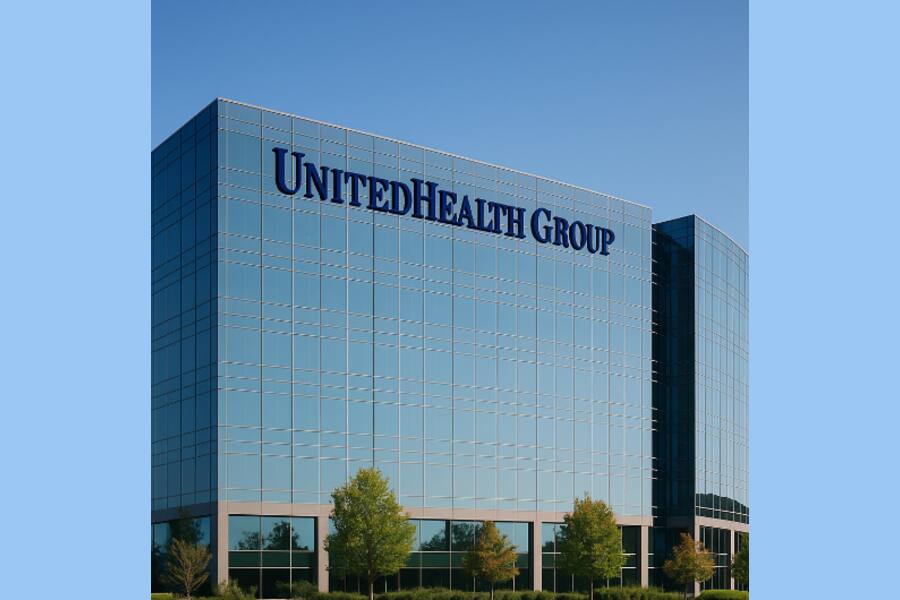
UnitedHealth Group (UHG) is one of the largest healthcare and insurance companies globally. As of 2023–2024, it employed nearly 400,000 people, served approximately 151 million individuals, and generated revenues around $371 billion in 2023, rising to about $400 billion in 2024. Its asset base, through its Optum subsidiary, handles hundreds of billions in managed care services and pharmacy benefit assets. UnitedHealth operates two main segments: UnitedHealthcare, offering insurance products (Employer & Individual, Medicare & Retirement, Medicaid/community, global), and Optum, covering health services, technology, pharmacy benefits (OptumHealth, OptumInsight, OptumRx).
Growth has been strong: earnings rose from ~$3 billion in early 2000s to about $23 billion in 2023, an annual average growth near 12 % per year
Historical M&A Activity (up to 2023) — Chronological Highlights
Here are over 20 completed acquisitions by UHG, listed with names, dates, and deal values where disclosed:
- 1994 – Sold Diversified Pharmaceutical Services to GSK for $2.3 billion (divestiture)
- 1995 – Acquired MetraHealth Companies for $1.65 billion
- 2002 – Acquired GeoAccess and AmeriChoice (Medicaid plans) (undisclosed)
- 2003 – Acquired Mid‑Atlantic Medical Services insurer (undisclosed)
- 2003 – Acquired Golden Rule Financial (HSAs provider) (undisclosed)
- 2004 – Touchpoint Health Plan (Wisconsin) (undisclosed)
- 2004 – Oxford Health Plans (undisclosed)
- 2005 – PacifiCare Health Systems for $8.1 billion
- 2009 – Acquired UK-based ScriptSwitch for ~£50 million
- 2014 – Optum acquired Alere health services unit for $600 million
- 2015 – Acquired Catamaran Rx (PBM) for $12.8 billion
- 2017 – Acquired Rally Health (digital wellness) (undisclosed)
- 2019 – Acquired DaVita Medical Group for $4.3 billion
- 2019 – Acquired Equian (payments firm) for $3.2 billion
- 2019 – Acquired PatientsLikeMe (health data platform) (undisclosed)
- 2019 – Acquired Diplomat Pharmacy (specialty PBM) for $300 million
- 2021‑2022 – Acquired Change Healthcare for approximately $8 billion (closed Oct 2022 after regulatory challenge).
- 2022 – Agreed to buy LHC Group for $5.4 billion (closed Feb 2023).
- 2023 – Announced acquisition of Amedisys in all‑cash deal valuing at $3.3 billion ($101/share).
- Additional smaller/private deals within Optum and insurance vertical services not fully disclosed; Tracxn lists 26 total acquisitions averaging $4.14 billion each.
Recent Developments: 2024–2025
In 2024, UnitedHealth sold its Brazil operations as a divestiture, impacting employee compensation metrics and reflecting a strategic withdrawal from international retail insurance.
The 2023 acquisition of Amedisys has become a regulatory flashpoint: the U.S. Department of Justice sued in November 2024 to block the $3.3 billion Amedisys deal on antitrust grounds, citing reduced competition in home health and hospice markets, especially given UHG’s prior LHC acquisition in 2023. UHG has proposed to divest at least 128 home health/hospice facilities, and signed agreements to sell certain sites to BrightSpring and Pennant Group (Pennant paying ~$102.5 million) to address DOJ concerns. UHG and DOJ are heading to mediation in August 2025.
Meanwhile, UHG’s stock has dropped nearly 40 % in 2025 amid rising medical costs, tighter regulation and fallout from a cyberattack on Change Healthcare in 2024. The CEO Andrew Witty has stepped down, and critics, including Senator Warren, are calling for a structural breakup of UHG’s vertically integrated model, which now faces scrutiny as a potential liability rather than advantage.
Divestitures: Notable Sales
- 1994 – Sold Diversified Pharmaceutical Services to GSK for $2.3 billion.
- 2024 – Divested its Brazil insurance business (terms undisclosed).
- 2025 (pending) – Proposed to divest home health and hospice centers as conditions of Amedisys acquisition, including ~$102.5 million sale to Pennant, and additional to BrightSpring.
Strategic Analysis: What Worked and What Didn’t
Successful Moves
- PacifiCare (2005) and Catamaran (2015) transformed UHG’s scale in insurance and PBM operations, yielding strong pay‑off in revenue and integrated capabilities.
- Optum build‑out (post‑2010) through acquisitions like Alere, Rally, PatientsLikeMe, Diplomat, DaVita Medical Group, Equian, has given rise to a tech‑enabled care delivery powerhouse contributing nearly 40‑50% of profits by late 2010s.
- The Change Healthcare integration (2022) delivered access to the largest health‑payments clearinghouse and data stream, boosting OptumInsight scale, despite regulatory scrutiny.
Less‑successful / controversial areas
- The Change Healthcare cyberattack in 2024, which disrupted national medical claims flow, exposed integration risk; it triggered regulatory and political backlash and investigations into UHG’s system risk.
- Ongoing antitrust challenges over Amedisys and Change Healthcare reflect limits of scale: DOJ is actively pushing back, imposing divestitures, and threatening lawsuits.
- The expanding vertical integration strategy, once an advantage, is now under fire for generating cost‑pressure duplication: as both insurer and care provider, UHG bears medical cost increases twice over, eroding margins under rising utilization and regulation.
Strategic Rationale & Decision‑Making
- UHG’s M&A strategy over decades has aimed at building a vertically integrated ecosystem: combining insurance (UnitedHealthcare) with care delivery, pharmacy services, and data analytics (Optum). This was anticipated to increase control, reduce fragmentation, and capture more value across the healthcare chain.
- Early acquisitions expanded insurance participation via Medicaid/Medicare and regionally (PacifiCare, MetroHealth, AmeriChoice).
- Later, Optum‑focused deals built digital, delivery and pharmacy platforms (Alere, Catamaran, Rally, DaVita Medical, PatientsLikeMe, Diplomat).
- Strategic rationale: migrate from fixed‑margin insurance toward growth in value‑based care, data‑driven services, and cross‑seller capabilities, especially in Medicare Advantage, where coding and scale deliver higher reimbursement.
- More recently, the aggressive expansion in home health (LHC, Amedisys) was designed to capitalize on shifting care settings, population aging, and move downstream in care delivery, but is hitting regulatory barriers in 2024‑25.
Summary
UnitedHealth Group has leveraged M&A as a core growth engine, executing large and small acquisitions to build a diversified, vertically integrated health care business. Most of their major bets, PacifiCare, Catamaran, Optum platform build‑out, LHC, have delivered earnings growth and market leadership.
However, the convergence of heightened antitrust scrutiny, escalating healthcare costs, and setbacks such as the Change Healthcare cyberattack and DOJ pushback on Amedisys indicate the risks of scale are rising. Divestitures, past and prospective, reflect a strategic recalibration.
The coming years will test whether UHG can sustain its integration model profitably under new political and regulatory realities, or whether strategic peel‑away of assets becomes necessary.