
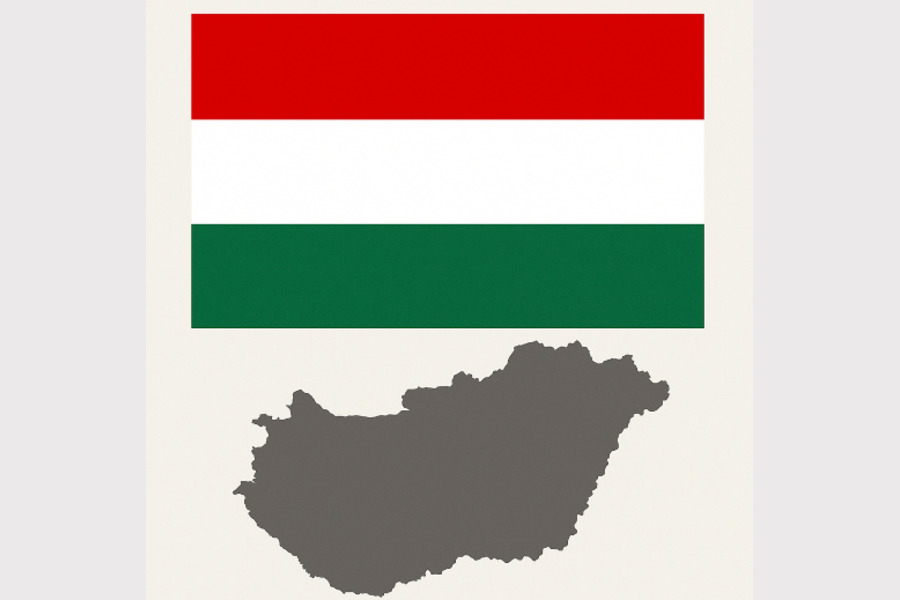
Hungary’s economy, a €240 billion nominal GDP market in 2025, sits at the heart of Central Europe, supported by strong industrial (31% of GDP) and services (65%) sectors. Despite a slight GDP dip in 2023 (-0.9%), ambitious infrastructure and tech investments signal recovery ahead.
M&A remains a key growth driver. In 2023, Hungary logged 57 deals totaling ~€3 billion, primarily in ICT (€2.65 billion), finance (€0.74 billion), then energy, real estate, and industry. From 2022 highs of USD 5.9 billion across 137 transactions, tech (36 deals) and real estate (15) led. In fact, tech and telecom dominate both deal value and volume, reflecting a mature VC/PE-backed ecosystem that also delivers profitable private equity exits (e.g., 672 VC/PE deals in 2021).
Regulatory Environment: What’s Unique?
- Dual FDI screening: Hungary implements two parallel foreign direct investment screening processes—more intensive than most EU states—leading to unpredictability and delays.
- Frequent emergency powers: The government frequently invokes a “state of emergency,” giving broad regulatory and political influence over strategic deals
- “Magyarisation” agenda: Hungary under Prime Minister Orbán aims to re-nationalize key sectors (telecom, energy, finance). This has triggered targeted taxes, pressure or administrative interventions to encourage foreign sell-offs.
- Windfall taxes and “superprofit” levies: Sectors—especially foreign-owned supermarkets and energy—face extra charges, intended to coerce ownership transfer.
- EU regulatory friction: Cross-border deals are faced with opposition by other EU states—for example, Hungary-backed bids for Talgo (Spain) and Romanian E.ON triggered security concerns.
Historical M&A Activity in Hungary
2016–2019: Privatizations & Real Estate
- 2016: State-owned Corvinus (via Corvinus International Investment) acquired a 15% stake in Erste Bank Hungary for HUF 38.9 billion; sold back in late 2023 for HUF 87.5 billion.
- 2018–19: Vodafone Hungary bought UPC Hungary, rebranded operations to Vodafone
- 2016–17: TriGranit sold Millennium Towers in Budapest for €175 million, marking one of the largest office deals.
2020–2022: Digital deals & market consolidation
- 2020: UPC fully integrated into Vodafone.
- 2021: State tweaks foreign investment screening; global minimum tax phased in.
- 2022: Hungarian M&A reached a 10‑year high with 137 deals totaling USD 5.88 billion. Key sectors: tech (36 deals), real estate (15), energy (12), manufacturing (10).
- Dec 2022:
- Erste Bank Hungary took over Commerzbank’s corporate unit
- OTP Bank signed to acquire Uzbekistan’s Ipoteka Bank
- Szallas Group sold to Wirtualna Polska for ~€82 million.
2023: State-led megadeals & shakeout
- 57 deals—the second-lowest count since 2020—but combined value surged to €3.77 billion
- Vodafone Hungary acquired by state-aligned Corvinus & 4iG for ~USD 1.78 billion (HUF 660 billion)—comprised over 55% of total deal value
- Corvinus also bought stakes in insurers Aegon, Union, Posta Biztosító, and stake in Vodafone.
- MBH Bank emerged via merger of MKB, Takarékbank, Budapest Bank on May 1, creating largest Hungarian-owned bank holding.
- Other big players: MOL expanded into energy and logistics; Indotek took 47% of Auchan Hungary.
- Deal volumes low (57) due to regulatory burdens and geopolitical uncertainty.
Top 20 M&A Deals up to 2023
| Rank | Target / Transaction | Value (€) |
| 1 | Vodafone Hungary acquisition (Corvinus/4iG) | 1.64 bn / USD 1.78 bn |
| 2 | Budapest Airport (Corvinus/Vinci) | 3.1 bn + 1.2 bn debt (~4.3 bn) |
| 3 | Telekom assets from PPF to e& (UAE) | 2.2 bn |
| 4 | Erste stake sale back to Austrian Erste | ~0.235 bn (HUF 87.5 bn) |
| 5 | Aegon/Union insurance stake | 0.35 bn |
| 6 | Posta Biztosító stake | – (significant but unspecified) |
| 7 | MBH Bank merger | Large-scale (mega transaction) |
| 8 | Commerzbank Hungary sale to Erste | N/A |
| 9 | Szallas Group to Wirtualna Polska | 0.082 bn |
| 10 | TriGranit Millennium Towers | 0.175 bn |
| 11 | UPC acquisition by Vodafone | N/A |
| 12 | BorsodChem nitric acid plant investment | 0.4 bn |
| 13 | OTP acquires Ipoteka Bank (Uzbek) | International deal |
| 14 | MOL’s Alteo takeover | N/A |
| 15 | MOL acquires OMV Slovenia | N/A |
| 16 | PPF Telekom assets sale loop | 2nd-place telecom assets |
| 17 | MKB / Takarékbank / Budapest Bank merger | Under MBH Bank umbrella |
| 18 | BorsodChem air separation unit by Linde | 39 m investment |
| 19 | Aegon home savings bank sale | via Erste |
| 20 | BNP Paribas asset mgt sale | via Erste |
2024–2025: Recent Deals & Strategic Trends
- Jan 2024: Hungarian government moved to acquire Budapest Airport, completed June 2024 with Corvinus (80%) and Vinci (20%) for ~USD 4.7 billion
Success: restored national control over strategic infrastructure.
Challenge: taxpayer burden and risk in a capital-intensive asset. - Sept 2024: Hungary completed takeover of Skoda’s GySEV railway operator, increasing state railway sector presence.
- Jan 2025: MVM (state‑owned) bid €200 million for 68% stake in Romanian E.ON, controversial, under Romanian national security scrutiny due to Russian energy links.
Mixed: Ambitious energy expansion; regulatory risks and geopolitical backlash. - Mid-2024: OTP exploring acquisitions, including Luminor (Nordic/CEE bank) and potential big-ticket foreign bank deal.
Strategic: Regional banking consolidation, but integration complexity remains. - Mid‑2024: TriGranit sold to DRFG Investment Group, Polish manager Revetas exits CEE property.
Analysis: What Worked & What Didn’t
Successes
- Strategic state control: Large utilities, telecoms (Vodafone), airports, railways returned to domestic ownership—aligned with government agenda.
- Consolidation in finance: MBH Bank formation gives a national banking champion. OTP’s cross-border moves position Hungary regionally.
- Industrial development: Investments like BorsodChem expansion secured jobs and capacity through public–private partnerships.
Setbacks & Risks
- Regulatory pushback: FDI rules and special taxes deter foreign investors; high-profile criticism from SPAR, Heidelberg.
- International backlash: Hungary-backed bids (Talgo, E.ON Romania) blocked by EU peers over security concerns.
- Fiscal risk: Airport investment may strain budgets and expose state to infrastructure project risks.
Strategic Drivers & Decisions
- Sovereignty & national champions: Re-acquiring key infrastructure (telecom, transport, energy, finance) to insulate from foreign influences.
- Geopolitical alignment: Leveraging deals to deepen ties with strategic allies (e.g., Vinci, Qatar Investment Authority), but risking EU friction.
- Domestic consolidation: Creating domestic scale through MBH and MOL spinoffs, boosting local entrepreneurship.
- Reactive acquisition via economic pressure: Targeted taxes used to compel foreign exits before acquisitions.
Outlook & 2025 Predictions
Expect continued aggressive state-driven M&A: pursuit of European rail firms, banks (OTP expansion), and energy utilities (MVM). But success will hinge on navigating EU scrutiny, balancing domestic nationalism with EU single market rules, and managing financial risks.
Hungary’s M&A scene is uniquely shaped by a blend of state intervention, national interest, and strategic consolidation, a distinct path compared to more market-driven Western peers.